The Fabricateurialist's Guide To Buying Shirts
Essential tips and insights for selecting the perfect shirt. Learn about fabrics, fits, and craftsmanship from The Fabricateurialist.
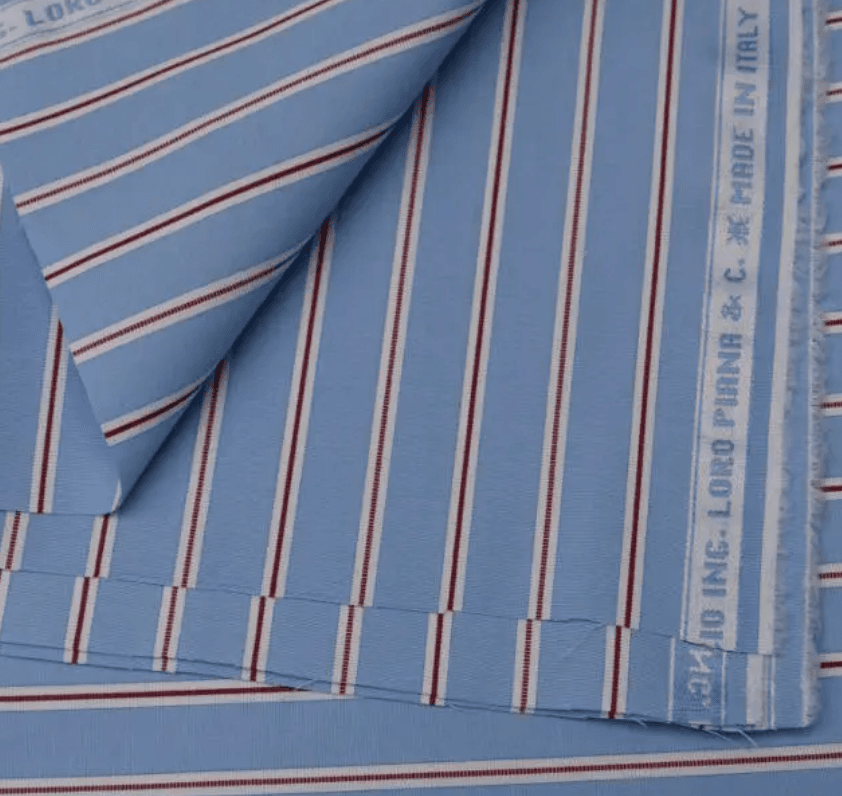
The Fabricateurialist presents a comprehensive guide to buying shirts that will transform your wardrobe and elevate your style. This guide covers everything from fabric selection to fit considerations, helping you make informed decisions about one of the most fundamental pieces in your closet.
O.W. Root: How do you define a properly fitting shirt?
The Fabricateurialist: There are metrics such as the position of the shoulder seam, or where the cuff sits when you stretch your arm out in front of you and bend your elbow 90°. All of which is to say that these determine how a shirt fits properly, without accounting for personal preferences or fabrics. You don't want a linen shirt to fit as fitted as a cotton twill after all.
OWR: How should a shirt fit around the chest, neck, waist, shoulders, and arms?
TF: This harkens back to your first question, which can be answered in more detail. A shirt should fit in a way that is comfortable for the wearer. Some people feel restricted in body hugging shirts and prefer something on the looser fitting side. Clothing is personal, and so is the right fit. All of this is to say that the proportions should be correct, meaning that a sleeve shouldn't be too long, a collar that doesn't gap, and shoulder seams that aren't closer to your trapezoids than your shoulder joint.
OWR: What makes a fabric right for a shirt, whether it be formal or informal? What makes a fabric wrong?
TF: There are pros and cons to every fabric. A 2ply twill will do most things well, but also look out of place or be too warm in the wrong settings. Determining what is right or wrong requires one to evaluate the weight, weave, and composition.
OWR: How much do buttons matter? When are lighter buttons best? And when are darker buttons best?
TF: This is a stylistic question. Some people, and brands, love a contrasting button, while others stick to natural mother-of-pearl buttons no matter the fabric. I recently picked up a flannel shirt with buttons made from coco, they matched the casual shirt pattern and fabric, but MoP buttons would have worked too - it is all a matter of choice. Something similar can be said about the button thickness. 2mm and 4mm buttons carry visual heft, but are also a matter of haptic preference.
OWR: French front or visible placket? When is French Front ideal and when is a visible placket ideal?
TF: You mean the lint collector? Something that a growing number of followers are pointing out is the difficulty of removing lint from French packets. So while your question steers towards the shirt style, it is something that rarely gets mentioned in this context. Personally, a French placket works best for plain shirts that are worn in a formal and dressier environment. A sport placket matches flannel, OCBDs, and heartier fabrics better because it adds visual weight to the shirt.
OWR: What's the role of the collar? What makes a collar good? What makes a collar bad or wrong?
TF: The roll of the collar? The pun is intended, but all jokes aside; proportions. A good collar is proportional. It frames the face, hence why I only wear at least a spread collar, but 8/10 times it is a cutaway collar. The OCBD crowd loves a collar roll, and for them, this is the only factor that determines a "good" collar. Does that mean that a collar roll on a cutaway is just as desirable ? Most likely not, but it is a preference. It looks good on some and sloppy on others. If you want to determine what a good collar is, explore proportions and shapes. In regards to the technical execution, a floating interlining is deemed the best collar construction by most, but you will also find people who are enamored with their heavily fused collars that could double as drywall for a McMansion.
OWR: Pocket or no pocket? Patch pocket or flap pocket?
TF: It wasn't so long ago that many of the Italian high-end RTW brands came with a piece of fabric that allowed customers to add a chest pocket when buying the shirt. The store's tailor would sew it on. That complementary piece of fabric is gone now, presumably because the few customers who opted for a chest pocket weren't worth the hundreds of meters of extra fabric each year. I find chest pockets to be atrocious eyesores that throw any symmetry and visual cohesion off balance, but that does not mean that they don't have a place and a practical purpose. Flap pockets, especially when paired with skinny pants, emphasize the male "AirPod built" even more - not a fan, but you do you.
OWR: What's one important detail people always overlook when shopping for a shirt?
TF: It is less about a single detail and more about understanding one's wearing habits. I frequently get comments stating that Sea Island cotton has to be the best shirt fabric. That one can get a bespoke shirt made from Sea Island cotton for half than "insert luxury brand du jour". Individual components are beyond the point. If you throw your shirts in the washer and dryer everyday after 8 hours at a desk, a bespoke shirt in Sea Island cotton isn't going to last very long under these conditions. The same goes for linen shirts. The notion that linen has to be densely woven because it is "cheap" if it isn't, shows how much room there is for tailors and brands to increase product literacy among consumers. Weave density and quality don't necessarily correlate in this way. A compact linen fabric will also be much less breathable than a loosely woven one. The most important detail when shopping for a shirt is understanding your own requirements and usage.
Customers would have a lot more fun with menswear if they didn't try to emulate editorial snaps they see on Instagram, but figure out their own taste through trial and error. The worst that can happen in tailoring is that the clothes wear you rather than you wearing the clothes all because you are dressing up as the imaginative concoction of stylist that you have never spoken to.